What Else Is in Your Cinnamon Jar?
A jar of cinnamon should hold one thing. Here is what fumigation, irradiation and added ingredients actually mean in the spice trade, told straight.
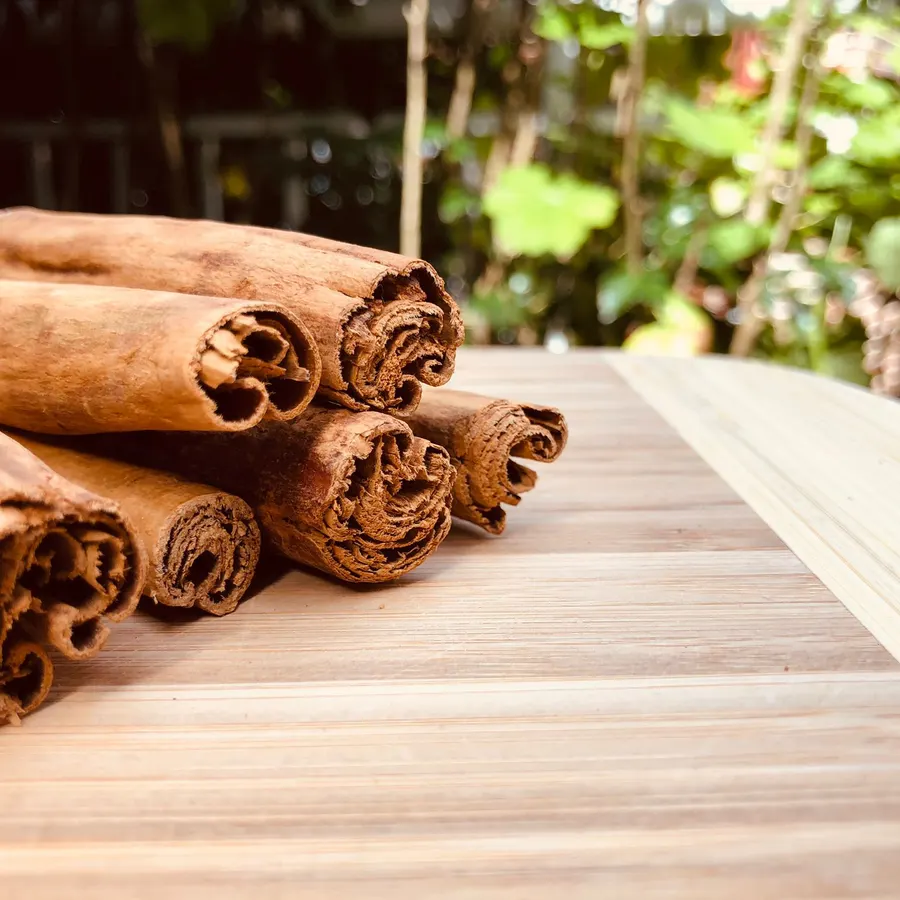
Turn a jar of cinnamon over and the ingredients line should say cinnamon. That is the whole list. It sounds like a low bar, and for whole quills it usually is.
Ground spice is where the questions start, and most of them are not about what has been added. They are about what was done to the spice before it reached the jar. None of this is a scandal, and we are not going to pretend otherwise. It is simply worth knowing what the words mean, so you can read a label properly and stop worrying about the things that do not matter.
One ingredient is the whole point
True cinnamon is the inner bark of Cinnamomum verum, a tree native to Sri Lanka, which still produces 80 to 90 per cent of the world’s supply of true cinnamon (Wikipedia). Making a quill is slow, careful handwork. A peeler loosens the inner bark with a brass rod, splits and lifts it away in sheets, then dries the sheets in shade and afterwards in darkness before rolling them and cutting them to length (Wikipedia). At no point does anything go in.
That process is also its own protection. A whole quill is visibly bark, so it is difficult to extend with anything cheaper without you noticing. Powder is a finer, more forgiving hiding place, which is why the honest advice is to buy quills where you can and grind them yourself.
It is worth saying what the regulators actually worry about, because it is duller than the internet suggests. The United States Food and Drug Administration keeps a formal policy on cinnamon adulteration, and the defect it addresses is insect and rodent filth rather than sawdust (FDA). Storage and handling are the real risks in this trade. Mystery fillers are mostly a story people tell.
What fumigation means, and why we do not do it
Fumigation means treating a food with a gas to kill microbes and insects. In the spice trade the gas most often used has been ethylene oxide, and it is effective, which is exactly why it became common.
It is also not permitted on food in Europe. The European Union sets maximum residue levels of 0.10 parts per million for spices and 0.05 for herbs, measured as the total of ethylene oxide and its by-product 2-chloroethanol (CBI). Those limits exist because the problem is real. When the European Spice Association surveyed its members in November 2020, 7 per cent of the samples analysed carried residues above the allowed level (CBI).
We have never fumigated our cinnamon. That is a choice about how the spice is grown, dried and moved rather than a clever process, and it is one of the few claims we make that you can check by smell. Fumigation and heavy treatment cost a spice some of its volatile oil, and volatile oil is the entire reason cinnamon smells like anything at all.
Irradiation, and why the label often stays quiet
Irradiation is the other route. The bark is passed through ionising radiation to reduce microbial load, and the FDA authorises it for spices (FDA).
Here is the part most people miss. When a whole food has been irradiated, the label must carry the radura symbol and the words “treated with radiation” or “treated by irradiation”. But the FDA does not require individual ingredients within multi-ingredient foods to be labelled that way, and when irradiated ingredients are added to a food that has not itself been irradiated, no special labelling is required at all (FDA).
So the spice sold to you in a jar tells you. The same spice inside a biscuit, a blend or a sauce does not have to. That is a labelling boundary rather than a conspiracy, and knowing where it sits is more useful than being alarmed by it.
Read the ingredients, and know the source
If anything besides cinnamon is in the jar, it belongs on the ingredients line, so the check takes two seconds. Anti-caking agents and bulking flours turn up in blends and seasoning mixes far more often than in single spices, and a single-ingredient label is the simplest guarantee there is.
Source matters as much as ingredients. In October 2023 the FDA investigated children with elevated blood lead levels and traced the problem to cinnamon used in apple purée pouches, where the spice tested at between 2,270 and 5,110 parts per million of lead (FDA). A follow-up survey of ground cinnamon from discount retailers led to a public health alert in March 2024, with recalls recommended for six distributors whose products ranged from 2.03 to 3.4 parts per million (FDA). Those were particular products moving through particular supply chains, not cinnamon as a category. What they show is that a long, anonymous chain is the thing worth avoiding.
Ours is short on purpose. Our family grows the cinnamon in Sri Lanka, our peelers roll every quill by hand, we never fumigate it, and we sell it direct so growers keep a fairer share and we can tell you exactly where it came from. If you want the simplest version of a clean label, start with Ceylon cinnamon sticks and grind what you need, or keep true Ceylon cinnamon powder close to the stove and read one short ingredients line with nothing to explain.
If you would like to see where that short ingredient list actually begins, we walk through the growing in how we grow cinnamon.
Sources: Cinnamomum verum (Wikipedia) · FDA: CPG Sec 525.225, whole and ground cinnamon adulteration · CBI: industry warning about sterilisation residues in spices · FDA: Food irradiation, what you need to know · FDA: investigation of elevated lead and chromium levels, cinnamon applesauce pouches · FDA: alert concerning certain cinnamon products
Taste the difference for yourself
Real Ceylon cinnamon, grown and hand-rolled on our family estate in Sri Lanka.
Shop the estate