Thomas DeLauer Says Cinnamon Shrinks Belly Fat. Does It?
Thomas DeLauer has a second video on cinnamon, belly fat and GLP-1. The mechanism is real and interesting. So far it is pig gut tissue in a dish, and mice.
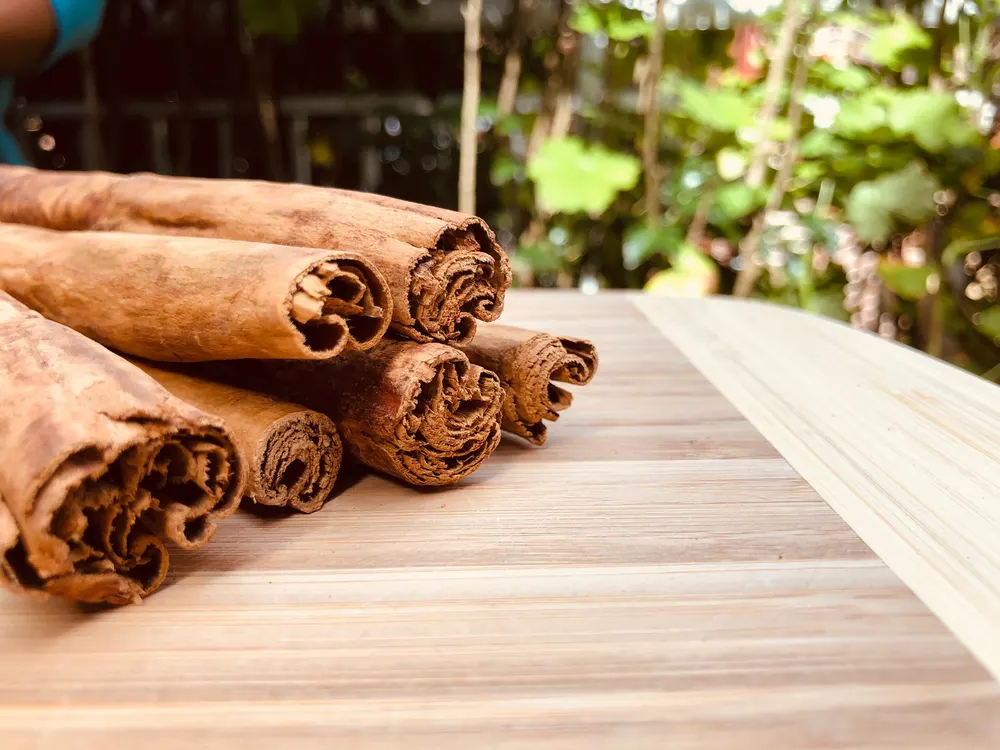
Thomas DeLauer has a second video saying that three grams of cinnamon each morning shrinks abdominal fat in two weeks.
And it gets into GLP-1, the hormone behind the new weight loss drugs.
Now, the mechanism is real. And it is genuinely interesting.
But so far, it has been shown in pig gut tissue in a dish, and in mice.
We grow and sell cinnamon. So, obviously, a video like that is good for our business.
But rather than simply passing the claim on, we went and read the research properly.
And here is where the evidence actually sits.
This is general information, and not medical advice. Cinnamon is not a treatment for anything, and it is not a substitute for prescribed medicine. If you have been prescribed a GLP-1 medication, or anything else, do not change how you take it because of a video, or because of us. Talk to your doctor.
The GLP-1 part is real, and it is worth understanding properly
This is the bit that surprised us, so we will give it its due before getting to the caveats.
Cinnamaldehyde is the compound that gives cinnamon its warmth, and most of its smell.
It switches on a receptor in the gut called TRPA1.
That receptor sits on cells involved in releasing appetite and fullness hormones.
A review published in Nutrients this year brings the research together. It reports that, in pig intestinal tissue studied outside the body, cinnamaldehyde triggered significant secretion of CCK and GLP-1 through activation of that receptor (Nutrients 2026;18(3):547).
So there is a genuine biological mechanism here.
It is not hand waving.
It has also been observed in mice, where cinnamaldehyde slowed how quickly the stomach emptied and reduced how much the animals ate in the short term.
But where has this actually been shown?
This is the important part.
An ex vivo porcine intestine model means pig gut tissue kept alive in a laboratory, with the compound applied directly to it.
That is useful for proving that a biological mechanism exists.
But it is not the same thing as a person having a cup of cinnamon tea.
The review says the underlying mechanisms remain only partially understood. It does not draw the line between pig tissue and a person, so that gap is ours to point out rather than the paper making the point for us.
One human trial found that a single dose of cinnamaldehyde improved glucose tolerance.
That is interesting.
But it is a very long way from showing that eating cinnamon for two weeks reduces abdominal fat.
And when you look at the wider evidence, the US National Center for Complementary and Integrative Health is quite clear. It is still unclear whether cinnamon supplementation helps with diabetes or weight loss. More broadly, “research doesn’t clearly support using cinnamon for any health condition” (NCCIH).
So, on the claim about losing abdominal fat in two weeks?
Nobody has demonstrated that in humans.
And then there is the idea of getting it without the side effects
This matters.
GLP-1 medications work because they strongly influence a hormone system.
The effects, and some of the side effects, come from that biological action.
What the cinnamon research describes appears to be much gentler.
And that is exactly why it is interesting, but also exactly why cinnamon should not be presented as a replacement for a GLP-1 medication.
If you are taking prescribed medication for weight management or blood sugar, cinnamon is not an alternative to it.
So what can we say confidently?
Cinnamon is generally considered safe when eaten in the quantities normally used in food. The same NCCIH page puts it as “likely safe when consumed in the amounts commonly used in foods as a spice or flavoring agent”.
A teaspoon in your porridge?
Great.
Not because we can promise it will burn belly fat, but because cinnamon makes porridge taste better.
If you start eating cinnamon every day, though, the type of cinnamon becomes more relevant.
Most supermarket cinnamon is cassia cinnamon. Cassia contains a compound called coumarin, and NCCIH notes that interactions between coumarin and the liver have been reported, and that prolonged use could be an issue for sensitive people. Of Ceylon cinnamon, often called true cinnamon, the same page says it “may contain a trace amount of coumarin”. We go into it properly in the coumarin question.
And three grams of cinnamon is roughly a heaped teaspoon.
Every morning, that becomes a meaningful amount of spice.
So if cinnamon is going to become a daily habit, there is a good reason to care about what is actually in the jar.
And how do we use it at home?
A spoonful of cinnamon powder through porridge or yoghurt.
A cinnamon stick left in the coffee pot while it brews.
Or a stick dropped into the rice while it cooks.
That last one?
Almost nobody tries it.
And almost everybody keeps doing it afterwards.
If you want the blood sugar research rather than the fat loss claim, we went through that in cinnamon and blood sugar.
Sources: Nutrients 2026;18(3):547, cinnamon-derived phytonutrients and metabolic disease - NCCIH: Cinnamon
Taste the difference for yourself
Real Ceylon cinnamon, grown and hand-rolled on our family estate in Sri Lanka.
Shop the estate