Ceylon Cinnamon vs Cassia: The Differences, Side by Side
Ceylon cinnamon and cassia side by side, with the two trees, how to tell the sticks apart, flavour, price and the coumarin figures Austria's AGES measured.
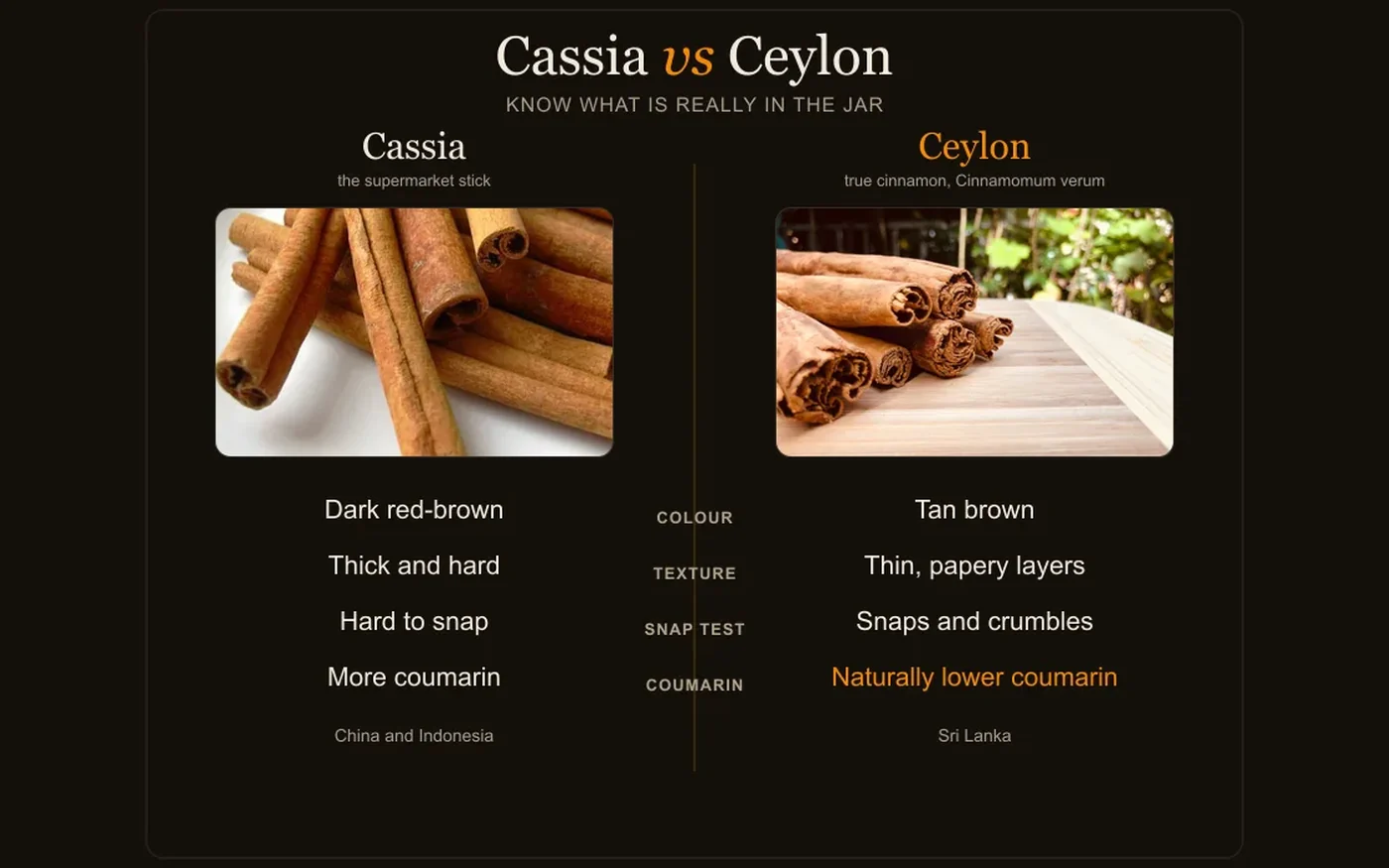
Ceylon cinnamon and cassia come from two different trees, and both are sold as cinnamon. Ceylon cinnamon is Cinnamomum verum, native to Sri Lanka and southern India. Cassia is Cinnamomum cassia, which originated in southern China and is also called Chinese cinnamon (Healthline). Cassia is what most supermarket cinnamon is. The two look different, taste different, and carry very different amounts of coumarin, a natural compound that food safety agencies set a daily limit for.
The two side by side
| Feature | Ceylon cinnamon | Cassia |
|---|---|---|
| Species | Cinnamomum verum | Cinnamomum cassia |
| Origin | Sri Lanka and southern India | Southern China |
| Colour | Tan brown | Dark brown red |
| The stick | Many tight, soft layers | Thicker, with a rougher texture |
| Flavour | Delicate and mildly sweet | Very strong and spicy |
| Coumarin measured by AGES | Up to 185 mg/kg | 1,880 to 3,260 mg/kg |
| Price | Quite expensive | Very cheap |
The colour, stick, flavour and price rows follow Healthline’s comparison, and the coumarin row is Austria’s food safety agency, AGES. Both are linked below.
How to tell the sticks apart
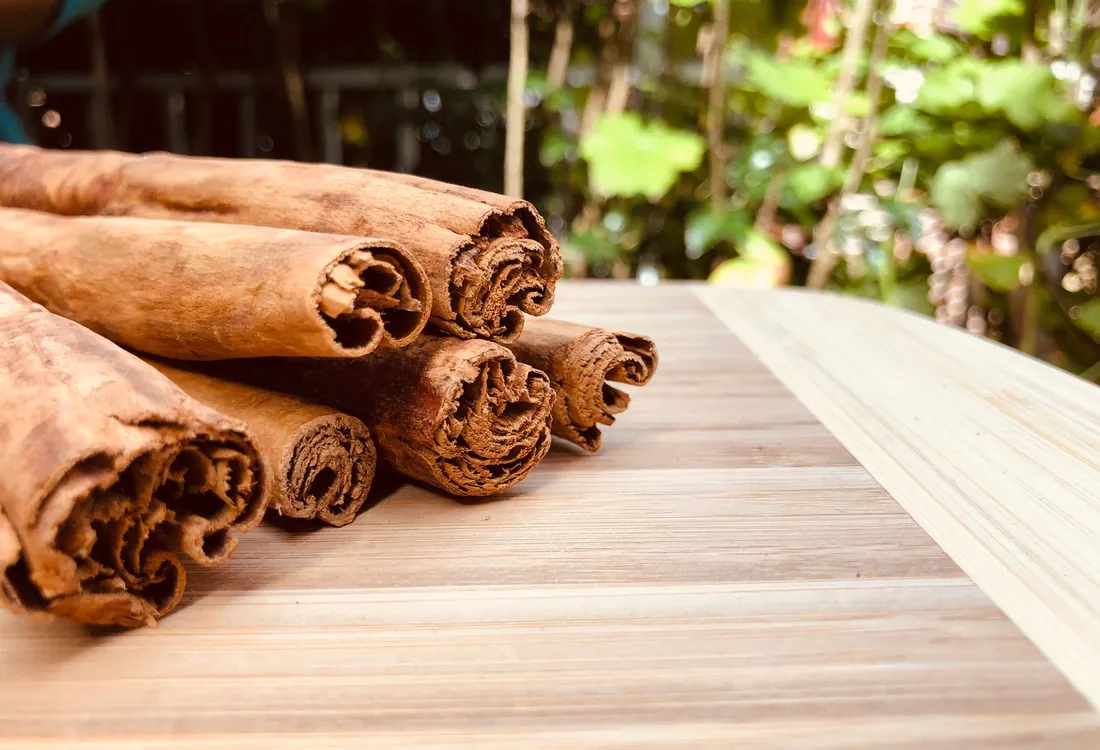
Pick up a stick and look at the end. A Ceylon cinnamon quill is made of many thin layers of bark rolled inside each other. It is light tan, and soft enough to crumble between your fingers.
A cassia stick is darker and thicker, with a rougher outside. It is hard, often hollow in the middle, and almost impossible to snap by hand.
Once cinnamon is ground, the layers are gone, so the label is the surer guide. Look for Cinnamomum verum or Ceylon cinnamon on the pack.
The flavour is where you notice it first
Ceylon cinnamon is delicate and mildly sweet, with a gentle warmth that unfolds rather than shouts. It suits lighter dishes, custards, apple, cream and vanilla, without taking over.
Cassia is bold and hot. It carries one strong note, which suits robust, heavily spiced cooking where you want the cinnamon to be loud.
Neither is wrong. Plenty of people love cassia’s heat in a cinnamon roll. But if you have only ever tasted cassia, your first cup of tea brewed with Ceylon cinnamon can be a real surprise.
Coumarin, in numbers
This is where the two spices genuinely part ways. Austria’s food safety agency AGES reported measurements of roughly 1,880 to 3,260 mg of coumarin per kilogram in cassia cinnamon, while the highest figure it recorded in Ceylon cinnamon was 185 mg per kilogram (AGES).
Those figures come from AGES’ own studies, so they are measurements and not legal limits, and 185 is the highest value they found in Ceylon cinnamon rather than a usual one. We have never had our own bark tested, so the numbers here are theirs and not ours.
The European Food Safety Authority set a tolerable daily intake for coumarin of 0.1 mg per kilogram of body weight, which is the amount considered safe to take every day across a lifetime. Working from that figure, the BfR calculates that an adult of about 60 kg reaches the daily limit at roughly 2 g of cassia cinnamon, and a small child of about 15 kg reaches it at roughly 0.5 g (BfR).
America’s National Center for Complementary and Integrative Health puts it more mildly. It says eating cassia cinnamon does not usually involve enough coumarin to cause significant problems, although some cassia products do contain high levels. It adds that prolonged use could be an issue for sensitive people such as those with liver disease, and that Ceylon cinnamon may contain a trace amount (NCCIH).
None of that makes cassia dangerous in a sprinkle on your porridge, and none of it makes Ceylon cinnamon a health treatment. This is a food composition matter rather than a medical one, and nothing here is medical advice. If you have a liver condition or you take regular medication, ask your doctor rather than a spice merchant. It simply means that if cinnamon is part of your daily routine, the low-coumarin variety is the sensible one. We go further into both compounds in the two molecules that decide your cinnamon.
Quality and price
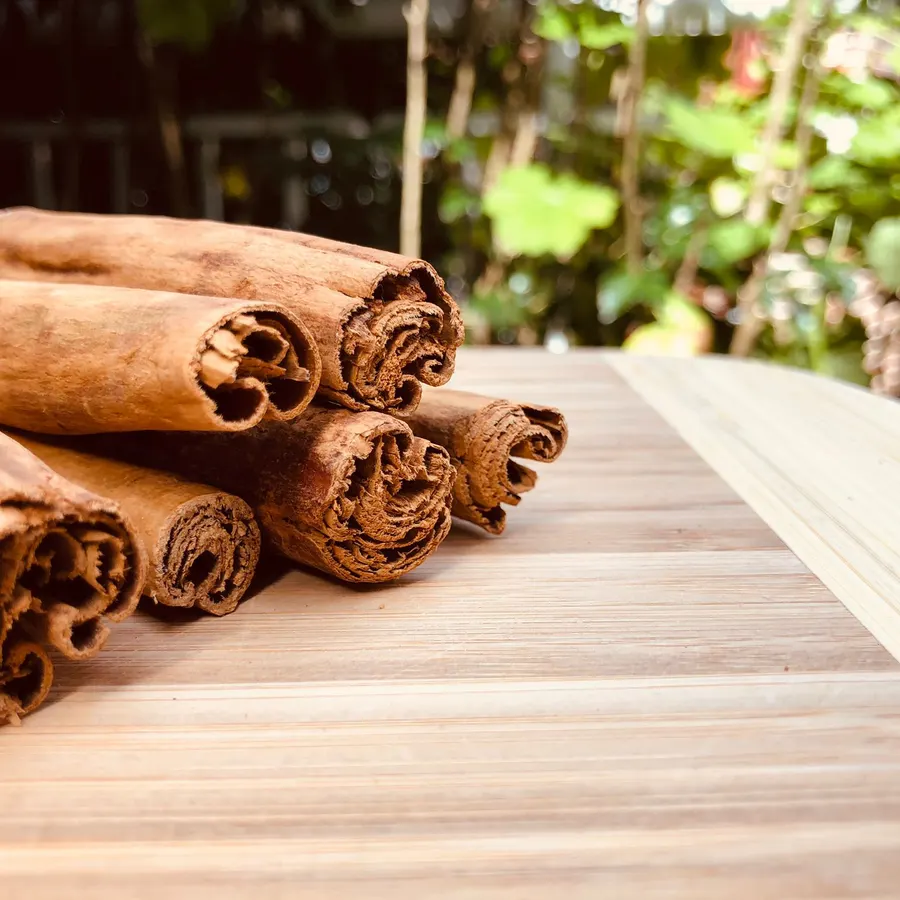
Ceylon cinnamon is the rarer, more painstaking spice. Every quill is peeled and hand-rolled, work that cannot be fully mechanised, so it costs more than a basic jar of cassia. Cassia is the cheap, widely available workhorse. The fair way to compare is price per gram, and buying in bulk direct from the grower is how true cinnamon becomes an everyday spice rather than a splurge. We show the maths in supermarket cinnamon vs Ceylon cinnamon.
So which should you buy?
For daily use, in your tea, coffee, porridge and everyday cooking, reach for Ceylon cinnamon. It is gentler, sweeter and naturally low in coumarin. Keep cassia around if you love a fiery cinnamon roll now and then. Most people, once they have Ceylon cinnamon in the cupboard, find they reach for it far more than they expected.
Our true Ceylon cinnamon sticks and powder are grown and hand-rolled on our family estate and partner farms in Sri Lanka, never fumigated, and sold direct so the growers keep a fairer share.
Sources: Healthline: Ceylon cinnamon vs Cassia · AGES: Coumarin · BfR: FAQ on coumarin in cinnamon and other foods · NCCIH: Cinnamon
Taste the difference for yourself
Real Ceylon cinnamon, grown and hand-rolled on our family estate in Sri Lanka.
Shop the estate