The Two Molecules That Decide Your Cinnamon
One molecule gives cinnamon its flavour. The other is why cassia and Ceylon cinnamon are treated so differently by food safety agencies, explained simply.
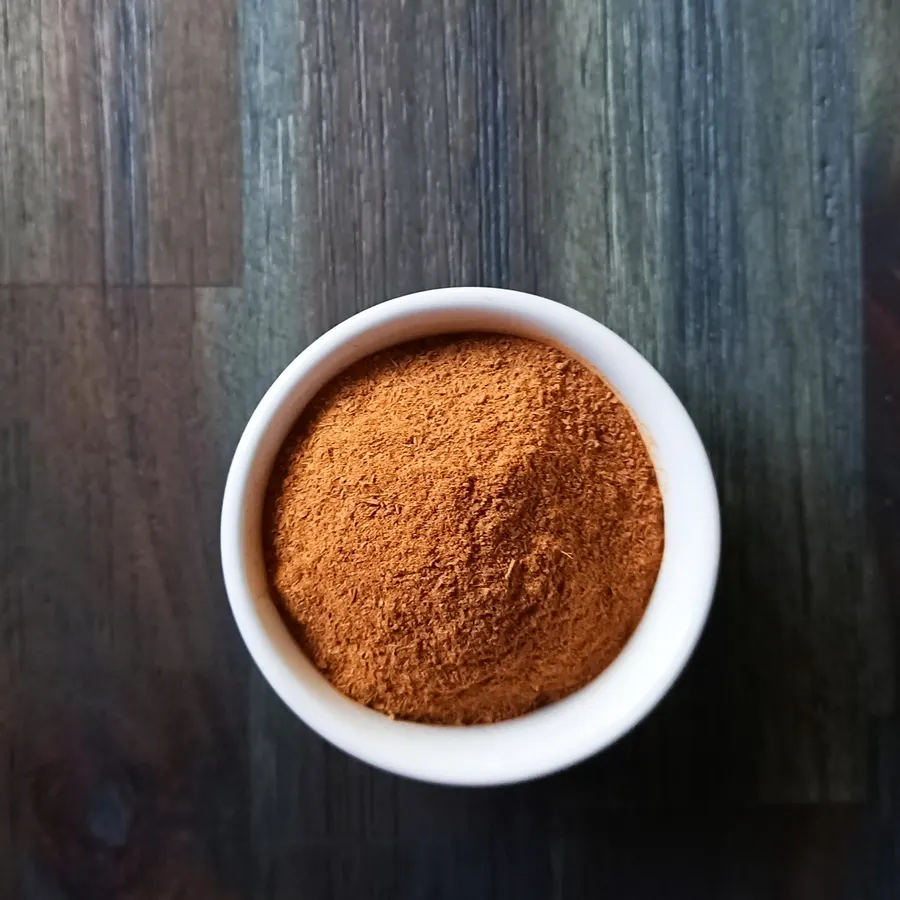
Almost everything that makes one cinnamon different from another comes down to two molecules. You have met the first one already, because it is the smell that reaches you when you open the jar. The second one you cannot taste at all, and it is the reason food safety agencies in Europe talk about cassia and Ceylon cinnamon in quite different terms. Neither of them is complicated.
Cinnamaldehyde is the flavour
The molecule doing the talking is cinnamaldehyde. Cinnamon bark holds about 0.5 to 1 per cent essential oil, and the principal component of that oil is cinnamaldehyde, which Britannica calls cinnamic aldehyde (Britannica: cinnamon). When you think you are tasting cinnamon, you are mostly smelling cinnamaldehyde, because so much of what we call flavour is aroma read by the nose rather than the tongue.
This is also why freshness matters so much. Aroma compounds like this one are volatile, meaning they drift off into the air at ordinary room temperature. A whole quill holds them far better than a powder, since less surface is open to the air. If a jar smells faint, it will taste faint, and no amount of extra spoonfuls will fix it.
Coumarin is the one you cannot detect
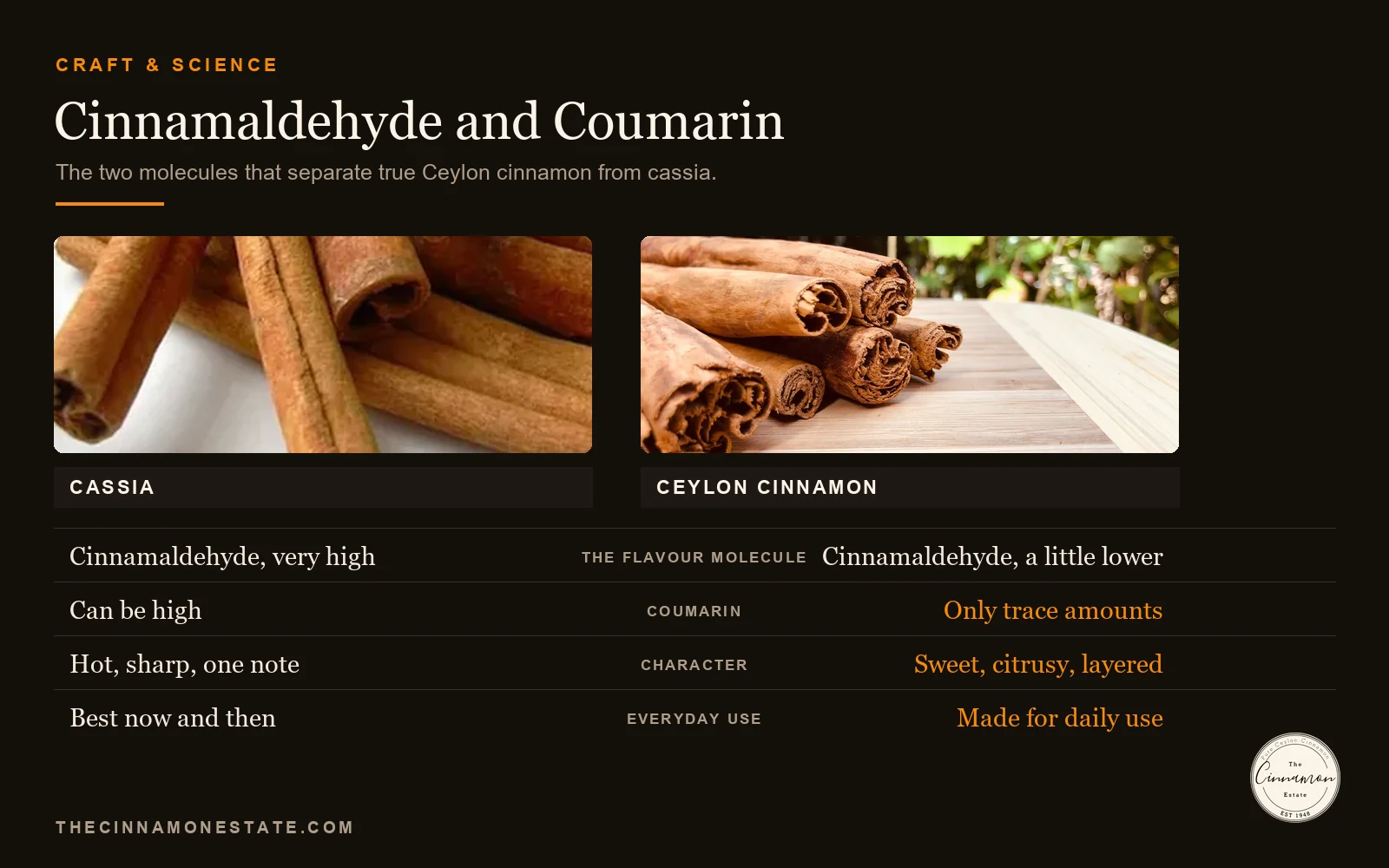
The second molecule is coumarin. It is a naturally occurring plant compound, and it is what gives woodruff its characteristic taste and smell (AGES). It turns up in tonka beans as well (Britannica: coumarin). It also occurs in cassia cinnamon.
Coumarin is present in such small quantities in a spoonful of spice that you cannot smell or taste it against the cinnamaldehyde. There is no home test. Whether your cinnamon carries a lot of it or almost none is decided entirely by which tree the bark came off, and you cannot tell by tasting.
The gap between cassia and Ceylon cinnamon is large
This is where the two spices genuinely part ways. Austria’s food safety agency AGES reported measurements of roughly 1,880 to 3,260 mg of coumarin per kilogram in cassia cinnamon, while the highest figure it recorded in Ceylon cinnamon was 185 mg per kilogram (AGES). The difference is not a few per cent. It is a difference of orders of magnitude.
Those figures come from AGES’ own studies, so they are measurements and not legal limits, and 185 is the highest value they found in Ceylon cinnamon rather than a usual one. We have never had our own bark tested, so the numbers here are theirs and not ours.
Because of that gap, Germany’s Federal Institute for Risk Assessment recommends eating cassia cinnamon in moderation. It also points out that coumarin reaches the body from other directions as well, cosmetics among them, so cinnamon is not the only source worth thinking about (BfR).
What the agencies actually say
The European Food Safety Authority set a tolerable daily intake for coumarin of 0.1 mg per kilogram of body weight, which is the amount considered safe to take every day across a lifetime. Working from that figure, the BfR calculates that an adult of about 60 kg reaches the daily limit at roughly 2 g of cassia cinnamon, and a small child of about 15 kg reaches it at roughly 0.5 g (BfR). Two grams is around a level teaspoon, which is a genuinely ordinary amount in a batch of baking.
America’s National Center for Complementary and Integrative Health puts it more mildly. It says eating cassia cinnamon does not usually involve enough coumarin to cause significant problems, although some cassia products do contain high levels. It adds that prolonged use could be an issue for sensitive people such as those with liver disease, and that Ceylon cinnamon may contain a trace amount (NCCIH).
None of that makes cassia dangerous in a sprinkle on your porridge, and none of it makes Ceylon cinnamon a health treatment. This is a food composition matter rather than a medical one, and nothing here is medical advice. If you have a liver condition or you take regular medication, ask your doctor rather than a spice merchant. It simply means that if cinnamon is something you use often, daily, or heavily, then which tree it came from is worth knowing.
What it means at home
Read the label rather than the front of the packet. Cassia is the ordinary supermarket cinnamon in most of the world, and it is often sold simply as “cinnamon” with no species named. True Ceylon cinnamon is Cinnamomum verum, and it looks different too, since a quill is made of many fine layers rolled together like a cigar rather than one thick curl of bark.
Use cassia where you want a hot, blunt hit and are using a little. Use Ceylon cinnamon where you want the sweeter, more delicate flavour and where you are reaching for the jar often.
If that second description sounds like your kitchen, our true Ceylon cinnamon powder and our Ceylon cinnamon sticks are grown and hand-rolled on our family estate in Sri Lanka, never fumigated, and sold direct so the growers keep a fairer share. Open a jar, take one breath, and cinnamaldehyde will do the rest of the explaining for us.
Sources: Britannica: cinnamon · Britannica: coumarin · AGES: Coumarin · BfR: FAQ on coumarin in cinnamon and other foods · NCCIH: Cinnamon · Healthline: Ceylon cinnamon and cassia compared
Taste the difference for yourself
Real Ceylon cinnamon, grown and hand-rolled on our family estate in Sri Lanka.
Shop the estate