Tarcin: The Ottoman Sweet Tooth That Never Left
In Turkey cinnamon is tarcin, and it lives on top of things. A warm look at sahlep, sutlac, the Ottoman palace puddings, baklava, and coffee and tea culture.
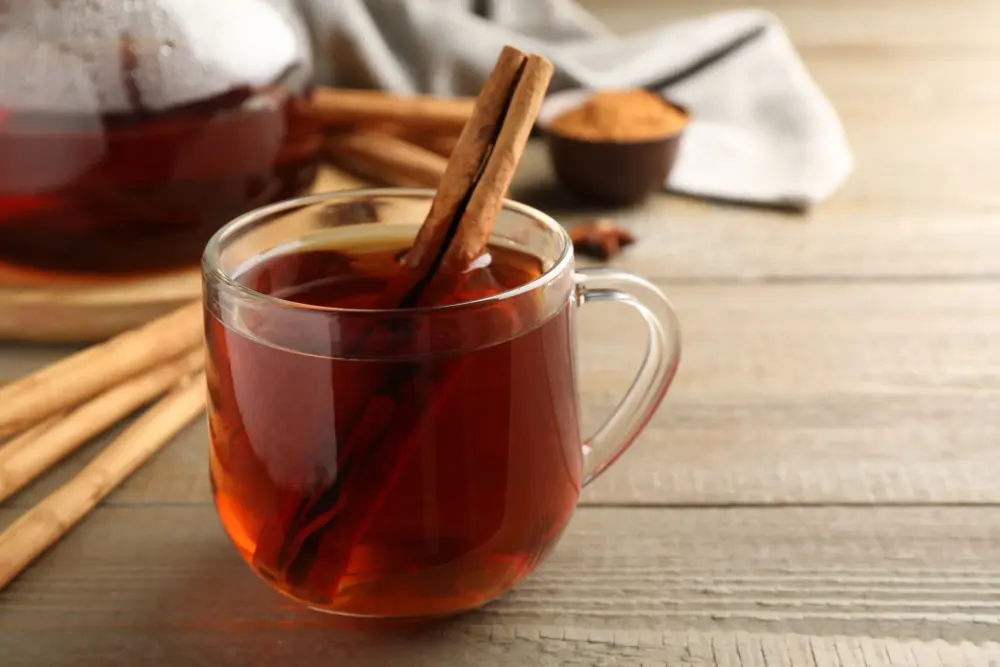
In Turkish, cinnamon is tarcin. Older Ottoman Turkish called it darcin, a name that points east towards China, which is roughly where the spice was understood to be coming from (Hurriyet Daily News).
Turkey has one of the great sweet cultures on earth, and cinnamon runs quietly through the whole of it. It is rarely the loudest thing on the plate. It gets dusted over the pudding, shaken across a winter drink, and it meets you at the door of a spice shop in Istanbul. Follow it around and you get a decent tour of the Ottoman kitchen.
The bazaar that spices paid for
Istanbul sat at the end of the spice road for centuries, and it built accordingly. The Spice Bazaar in Eminonu, known in Turkish as Misir Carsisi, was begun in 1660 after a great fire and funded with revenues from Ottoman Egypt, which is why it is also called the Egyptian Bazaar. It still holds around eighty-five shops, though sellers of Turkish delight, jewellery and dried fruit have gradually moved in on the spice traders (Wikipedia).
Cinnamon never grew anywhere near Istanbul. It arrived by ship and by caravan, it was paid for dearly, and a cook who had it used it with some care. That habit of restraint still shows in the food.
Sahlep, the drink that makes winter bearable
When the wind comes off the Bosphorus, Turkey drinks sahlep. It is thick, hot, milky and pale, and it is finished with cinnamon shaken across the top.
The thickness comes from an unlikely place. Sahlep flour is ground from the dried tubers of wild orchids in the genus Orchis, and it takes between one thousand and four thousand tubers to make a single kilogram. The Turkish version is made with hot milk rather than water and served with cinnamon as a garnish (Wikipedia). That arithmetic explains both the price of the real thing and the pressure on the plant, since Turkey harvests roughly thirty tonnes a year across dozens of orchid species.
The drink travelled, too. Seventeenth and eighteenth century London sold it on the street as saloop, sweetened and scented with rose or orange flower water, until coffee and tea elbowed it out of the way (Wikipedia).
Milk puddings, and one made of chicken
If there is one place cinnamon is guaranteed in Turkey, it is on a milk pudding (Hurriyet Daily News).
The everyday one is sutlac, a rice pudding in the wider muhallebi family. Istanbul’s muhallebici shops also sell firin sutlac, the oven-baked version whose top browns and blisters, eaten cold (Wikipedia).
Then there is the strange and wonderful one. Tavukgogsu is a milk pudding made with shredded chicken breast, and it was served to sultans in Topkapi Palace. The chicken is pounded into threads so fine you would never find it, the pudding sets pale and stretchy, and it is flavoured with cinnamon (Wikipedia). Medieval Europe cooked something very similar and called it blancmange, then quietly dropped the meat. Turkey kept it.
Asure belongs here as well. Also called Noah’s pudding, it takes at least seven ingredients, usually wheat, barley, rice, pulses, dried fruit and nuts, and cinnamon goes in with the other spices. What matters most is not the recipe but the sharing, because it is cooked during Muharram and carried out to neighbours, friends and the poor regardless of what anyone believes (Wikipedia).
Baklava, and an honest correction
Most people assume cinnamon is in baklava. In Turkey, it usually is not.
Turkish baklava is generally built on pistachios, walnuts or almonds without cinnamon, and it was probably developed in the imperial kitchens of Topkapi Palace. The sultan sent trays of it to the Janissaries every fifteenth of Ramadan in a ceremonial procession called the Baklava Alayi. Gaziantep made its name with the pistachio version, which in 2013 became the first Turkish product to win Protected Geographical Indication status in Europe. It is the Greek and Armenian versions of baklava that carry cinnamon, in the walnut filling and sometimes in the syrup (Wikipedia).
We would rather tell you that than let a nice line stand.
What sits beside the coffee and the tea
Coffee reached Istanbul by 1539, and within fifteen years of the first coffeehouse opening the city had more than six hundred of them (Wikipedia). Tea then overtook it. Cultivation began in Rize province in 1912 and reached large scale in the 1940s, and today Turks drink more tea per person than anyone else on earth, close to four slim-waisted glasses a day (Wikipedia). Cinnamon rarely goes in either cup. It is waiting on whatever is served alongside.
Why the softer bark suits this food
Turkish sweets are delicate more often than they are loud. A pudding dusted with cinnamon has nowhere to hide the spice, so the spice has to be good.
That is the case for true Ceylon cinnamon, Cinnamomum verum, which is softer and sweeter than the hard cassia bark sold as plain cinnamon in most supermarkets. Our family grows it on our estate in Sri Lanka, rolls every quill by hand, never fumigates it, and sells it direct so growers keep a fairer share.
Make a pot of rice pudding this week, bake it until the top catches, and finish it with true Ceylon cinnamon powder. Or drop a Ceylon cinnamon stick into hot milk and see what winter tastes like in Istanbul.
Sources: Hurriyet Daily News: A touch of cinnamon · Spice Bazaar (Wikipedia) · Salep (Wikipedia) · Sütlaç (Wikipedia) · Tavukgöğsü (Wikipedia) · Ashure (Wikipedia) · Baklava (Wikipedia) · Turkish coffee (Wikipedia) · Turkish tea (Wikipedia)
Taste the difference for yourself
Real Ceylon cinnamon, grown and hand-rolled on our family estate in Sri Lanka.
Shop the estate