In Lebanon, Cinnamon Lives in the Rice Pot
In Lebanon and Syria cinnamon lives in the rice pot and the mince, not the cake tin. This is a warm look at baharat, kibbeh, hashweh and the Levantine table.
Walk past a Lebanese kitchen in the late afternoon and you will smell it before you see anything. Onions are softening, mince is browning, and underneath it all sits something warm and sweet that does not belong to any of that, or so a Western nose insists.
It is cinnamon. In the Levant it goes in with the meat, and it has done for a very long time.
Seven spices in one jar
Most Levantine cooking starts from a single blend. Across the Middle East it is called baharat, which is simply the Arabic word for spices, borrowed long ago from Persian (Wikipedia). Every region keeps its own version.
The Lebanese and Syrian one is sabaa baharat, meaning seven spices. It usually gathers cinnamon, black pepper, white pepper, allspice, cloves, nutmeg and coriander, with paprika sometimes joining in (Wikipedia). Notice what is missing. There is no chilli heat driving it and no single dominant note. Cinnamon and allspice do the sweet work, the peppers do the sharp work, and the whole thing is rubbed into meat, stirred through rice, or loosened with olive oil and lemon into a marinade.
Get the blend right and half the cooking is already done.
The rice pot does the talking
Rice in the Levant is rarely plain. Hashweh means stuffing, and it is rice cooked with minced lamb or beef, toasted pine nuts and warm spice, served either on its own or spooned inside something else. Cinnamon and allspice carry it.
Then there is maqluba, which means upside down. Meat, fried vegetables and rice are layered into a deep pot, cooked together, and the whole pot is inverted onto a platter so the dish arrives looking like a layer cake (Wikipedia). It is served across Palestine, Jordan, Syria, Lebanon and Iraq, and the earliest trace of the name sits in a thirteenth-century Baghdad cookbook, though that older version was an egg dish rather than the rice one we know (Wikipedia).
Both dishes work on the same principle. The rice is not a side. The rice is where the spice lives, and the meat merely leans into it.
Kibbeh, and the city that made 58 of them
If one dish holds the Levantine table together, it is kibbeh. It is made from finely ground lean meat and bulgur wheat with Levantine spices, and it turns up fried into torpedoes, grilled, baked in trays, or served raw as kibbeh nayyeh (Wikipedia). It is a national dish of both Lebanon and Syria, which tells you how seriously it is taken.
Aleppo takes it most seriously of all. The city is credited with 58 different kinds (Wikipedia). The spiced mince filling, with its pine nuts and its warmth, is close cousin to hashweh, and cinnamon runs quietly through both.
Stuffed vegetables, and Sunday
The same spiced mince keeps travelling. Across the region, aubergines, courgettes, onions, peppers and tomatoes are hollowed out and packed with minced meat and rice (Wikipedia). Kousa mahshi, the stuffed courgette, and malfouf, the cabbage roll, are the versions most families argue about.
This is patient food. Someone sits with a corer and a bowl for an hour, and everyone else turns up when it is ready. Cinnamon suits that kind of cooking because it does not fade the way a fresh herb does. It settles in and holds.
And then the sweets
Cinnamon does dessert here too, it just does not stop there. Qatayef, the folded pancake eaten daily after iftar through Ramadan, is filled with sweet cheese or with a mixture of nuts, sugar, rose and cinnamon (Wikipedia). Awameh, the little fried dough balls soaked in syrup, carry it as well (Wikipedia).
So over one meal the same spice appears in the mince, in the rice, and then again at the end beside the coffee. Nobody finds this strange.
Why the gentle bark suits this food
Levantine cooking is layered rather than loud. Seven spices share one jar, a rice pot is asked to taste of meat and spice and nuts at once, and a tray of kibbeh has to hold together for a table of people.
That balance is what true Ceylon cinnamon, Cinnamomum verum, is good at. It is native to Sri Lanka, and its quills are made by loosening the inner bark by hand, peeling it, and rolling the fine sheets one inside another (Wikipedia). It tastes sweeter and softer than cassia, the thick hot bark sold as plain cinnamon in most supermarkets. In a seven-spice blend, the hot bark bullies the other six. The gentle one lets them speak.
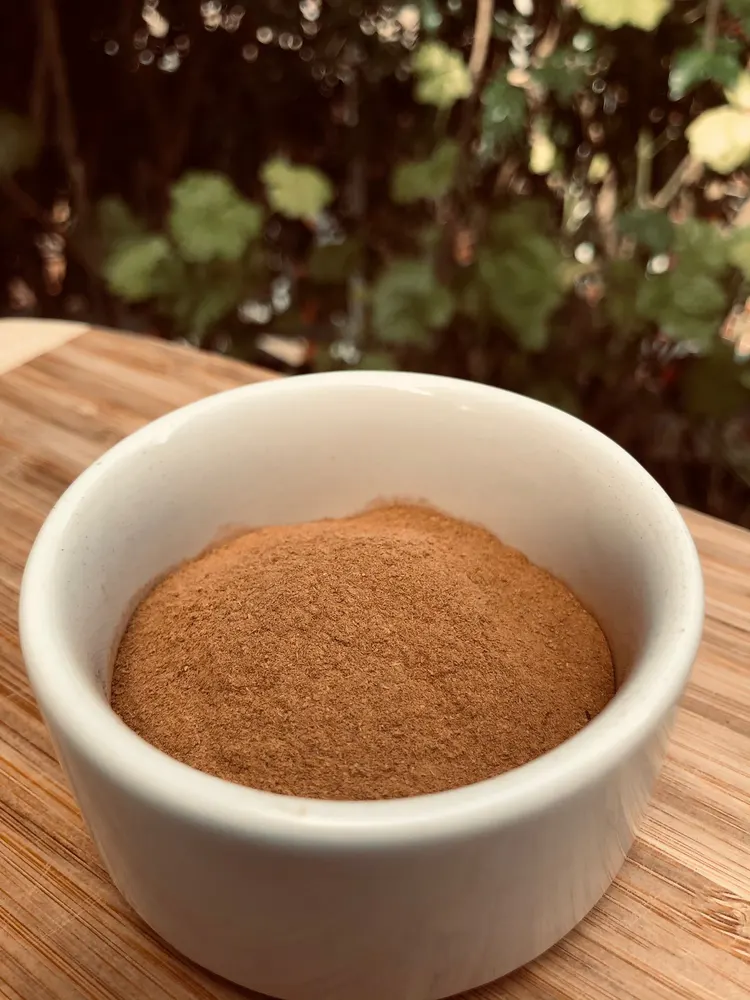
Our family grows it on our own estate in Sri Lanka, rolls every quill by hand, never fumigates it, and sells it direct so growers keep a fairer share. Grind a little true Ceylon cinnamon powder into your next batch of spiced mince, or keep Ceylon cinnamon sticks beside the rice tin. Cook one meal the Levantine way, with the cinnamon in the onions rather than the cake, and see what your kitchen smells like at five in the afternoon.
Sources: Baharat (Wikipedia) · Kibbeh (Wikipedia) · Levantine cuisine (Wikipedia) · Maqluba (Wikipedia) · Qatayef (Wikipedia) · Cinnamomum verum (Wikipedia)
Taste the difference for yourself
Real Ceylon cinnamon, grown and hand-rolled on our family estate in Sri Lanka.
Shop the estate